
They Changed Music Forever: the Ten Best Tangerine Dream Albums
by John Diliberto
TEN TANGERINE DREAM ALBUMS TO BLOW YOUR MIND 2025
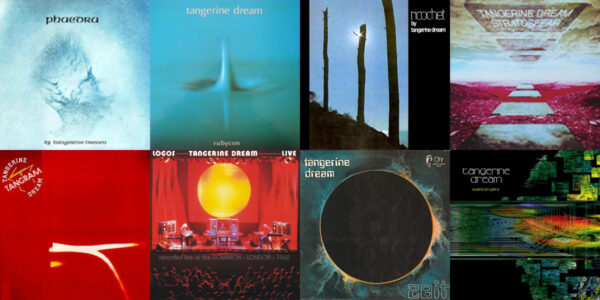
Fifty-five years ago Tangerine Dream began recording their electronic music in what was then West Berlin. Founded by Edgar Froese, Tangerine Dream has epitomized the electronic age of music, recording over 150 albums of synthesized compositions. Their film soundtracks include “Sorcerer” “Thief,” “Risky Business,” and “Legend.” Tangerine Dream founder and last original member, Edgar Froese, left the planet in 2015, but the group continues on with music he composed as well as their own works. Set your controls for the heart of Berlin as we explore 10 Tangerine Dream Albums to Blow Your Mind.
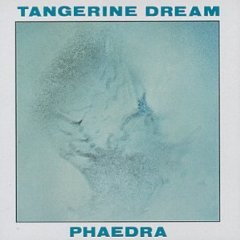
1-Phaedra
On February 20th, 1974, Tangerine Dream released the album that changed electronic music for the next 50 years. It takes its name from Greek mythology and its sound from the imaginations of Edgar Froese, Peter Baumann and Christoph Franke, the three members of Tangerine Dream at the time. Phaedra was their fifth album, coming after Atem in 1973 and Zeit in 1972. Both of those albums were abstract improvisations of floating sound fields. Zeit in particular was a minimalist, Ligeti-like exploration in texture and sustain with a mixture of electronics and a cello quartet. Phaedra had some of those elements, but on the side-long title track they were linked to sequencer grooves like rubber bands being twanged in space. It’s the sound you hear in every Berlin-School, retro-space band, a lot of techno and dance hits like Donna Summers’ “I Feel Love.”
2-Rubycon
Rubycon comes right on the heels of Phaedra. These are the signature Dream albums, the blueprint for every retro-space artist out there, the sound that influenced ambient, techno, and more. The classic trio of Edgar Froese, Christoph Franke and Peter Baumann found the secret of rubber band 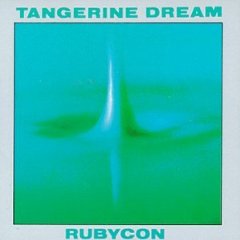 sequencer patterns discovered by Tonto’s Expanding Headband two years earlier. The Dream bound them in interlocking patterns, mellotron chords and synthesizer textures. Rubycon, an album length composition, is a definitive journey into inner space, constructed out of improvisation with the trio reveling in their new electronic gear.
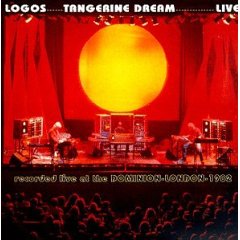 3-Logos
Tangerine Dream was an exciting live band in the 70s and half of the 80s. Listening to Logos, from 1982, you can hear why. This was the Dream working with a precision and structure that earlier works didn’t have, but they were still creating in long-form with a fair amount of improvisation. Johannes Schmoelling had been in the group for a while at this point and his influence is felt in gorgeous melodies and rhythms that have you ricocheting off your seat and between your headphone cups. This was really the truly last live recording from the group. Subsequent live albums would be more pre-programmed performances.
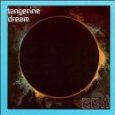 4-Zeit
It’s been called their most experimental CD, but I think it’s their most thoughtful, controlled and uncontrived album. Playing with a cello quartet, it’s a journey of interwoven tones phasing through each other from acoustic to electric to something entirely new. Ambient before ambient, but owing much to Gyorgy Ligeti pieces like “Atmospheres,” synths, gliss guitar, organ and “noise generators” unfold in undulating, slow motion patterns across what was a double LP. This 1972 recording is a drone zone manifesto, and a beautifully enveloping work free of melody, rhythm and just about any other conventional music signpost.
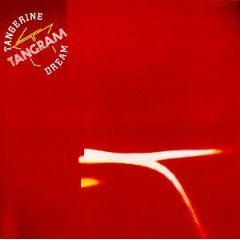 5-Tangram
This is one of the last of the early long-form Dream recordings. Originally a two sided work, Tangram is a multi-movement opus sometimes sabotaged by episodic writing, but still with some haunting themes amidst the pounding sequencers and more melodic invention than most prior Dream albums.
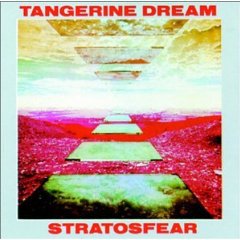 6-Stratosfear
This is the last of their classic quartet of 70s albums. It finds them embracing overt melody for the first time, with a title track that is hummable. It is also epic, a sequencer driven livewire of sound that just keeps propelling beyond the stratosphere. “Invisible Limits” also takes off into the beyond with a wailing Moog synthesizer lead over sequences that percolate like a synchronized rainfall. While these tracks are in overdrive, they have a more pastoral approach on “3AM at the Border of the Marsh from Okefenokee” with a sweet mellotron flute melody line
 7-Ricochet
While Rubycon and Phaedra were almost purely electronic except for a Peter Baumann flute piece, Ricochet found Froese bring out his first instrument, the electric guitar. Rhythms also became more percussive with Christoph Franke playing drums on “Ricochet Part One,” while “Part Two,” the live (mostly) side, found them working synthesized percussion into the mix. Melodies became much more overt and sequencer patterns more layered and interleaved. Another two-sided excursion that moves from the quietest solo piano spot to thundering sequencers from the heavens.
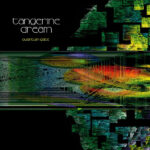 8-Quantum Gate
Quantum Gate is the first, full album from the post Edgar Froese edition of Tangerine Dream. This band, with Synth players Thorsten Quaeschning, Ulrich Schnauss and violinist Hoshiko Yamane was in the last band with Edgar, and they have carried on Froese’s works but definitely added some new twists that I find refreshing. This is definitely not a “ghost” band, and this album sends me into orbit as much as any record on this list.
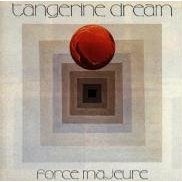 9-Force Majeure
Force Majeure was only the second Tangerine Dream album since their 1970 debut to use drums. And I think it was their last, in which case, drums went out in thunder. With Klaus Krüger coming in for the second album in a row (the first was Cyclone), the Dream took on a much more aggressive sound, especially in the screaming side long title track. With lots of blistering, fuzzed out electric guitar, this was a more rock driven edition of the band, but no less exhilarating. Edgar’s guitar playing is a revelation. I always found him kind of sludgy in concert, but on albums, he is incisive.
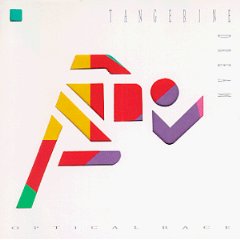 10-Optical Race
I know that consensus opinion has it that the Private Music years sucked, and they did, except for Optical Race, the first album they made for the label, owned by former Tangerine Dreamer, Peter Bauman. With just Froese and Paul Haslinger, they create dense, rhythmically charged excursions that stand up to some of their best works and hold up better than albums like Le Parc.
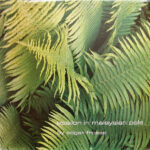 Bonus Album: Edgar Froese’s Epsilon in Malaysian Pale. This is the third solo album from Edgar Froese and a Dream album by any other measure. He recorded Epsilon between making Tangerine Dream’s Rubycon and Ricochet albums, both released in the same year. It featured two sidelong tracks; one, dominated by synthesizers and the other almost exclusively the Mellotron. That’s the instrument created in the 1960s that played orchestral instruments and choral sounds through tapes that were triggered by a keyboard. It was the sound of King Crimson’s In The Court of the Crimson King and much of the Moody Blues late 60s albums. Both pieces were close to 17 minutes long with the title track sending you into the mist-shrouded tropical forests in Malaysia and out on ocean waves for “Maroubra Bay”. Froese tapped into that mysterious sound that the mellotron had, with instruments played as if heard through a smoke haze. It’s a masterpiece of electronic music and a showcase for the Mellotron. If someone doesn’t know what a mellotron sounds like, this is the album to play for them, then watch as their mind drifts into Froese’s enveloping soundscapes.
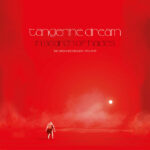 And for you deep space divers There is In Search Of Hades: The Virgin Recordings 1973-1979, it includes every album from Phaedra through to Force Majeure, with the complete albums, outtakes, live recordings, including some entire concerts and some recordings that never came out like “Oedipus Tyrannus.” Also has a nice book that details the recordings of these classics. That’s followed by Pilots of Purple Twilight: The Virgin Recordings 1980 – 1983 which takes you from Tangram to Hyperborea with soundtracks for Thief and The Keep tossed in.
John Diliberto ((( echoes )))
Updated 12/09/2025
In near-total agreement with this list. I’d switch out “Optical Race” in favor of “White Eagle” or “Hyperborea” 🙂
I wouldn’t argue with you, but I wanted to give some credit to them trying something new and more concise. And it is the best of the Private Music era.
Belated reaction: it’s hard to disagree with this list. I am not a fan of the ‘new’ Tangerine Dream, which has zero links with the Tangerine Dream that I grew up with in the 1970s. Seems like the current Tangerine Dream is a cover band of the ‘real’ Tangerine Dream. As a further aside, if you like the ol’ school Tangerine Dream, you need to get the 2019 box set “In Search of Hades” period. It blows the mind why this wasn’t released years, if not DECADES ago. My deepest thanks to John Diliberto and his team for brings us Echoes every week night (10 pm to midnight on WVXU in Cincinnati, where I live).
I don’t listen to any tangerine dream, but I’m about to dig in a bit. I am however a huge fan of Ulrich Schnauss, and highly, highly recommend giving him a listen. His music is really quite fantastic.
ULrich Schnauss has been a staple on Echoes for 20 years!
Fantastic band that has completely changed its sound many times. The list posted is something most groups would be happy to have done that in their career. I would have to find a place for Underwater Sunlight.
Sorcerer was my gateway into TD and will always be in my Top 10.
Gateway albums always rank high. I just think sorcerer suffers from the compromises of creating a soundtrack. It’s often more mood than music. But a great soundtrack.
Logos my first album which I loaned from the local library, closely followed by Phaedra, Rubycon and Stratosfear.
I have bought a few since and all still in my top 10 TD albums.
I would add Legend soundtrack
I think Legend got really dated. Heavy early sampling
How is “Thief” is not on this list.
You could ask that about many albums from TD. Thief has some great tracks and was a great score, but overall, not a defining album. It’s a defining soundtrack.