
Steve Reich at 90 - 10 Albums That Changed Music
byJohnDiliberto10/01/2026 I think it’s safe to say that without Steve Reich, Terry Riley, Philip Glass and La Monte Young, music today would not be the same. These four were the shock troops of early minimalism, bringing it out of the avant-garde and into something approaching the mainstream, influencing everyone from Tangerine Dream to The Who, Coldplay to Sufjan Stevens, Mike Oldfield to David Bowie.
Two musicians are cited again and again in interviews on Echoes. One of them is Brian Eno. The other is Steve Reich. Reich emerged from New York’s downtown music scene in the 1960s. His early works were tape-loop pieces, and these are the works that influenced people like Brian Eno. But he moved into instrumental compositions with his own ensemble. His earlier works were pure minimalism, like “Four Organs,” “Phase Patterns” and “Clapping Music.” That last one is just what it says: two musicians clapping a tongue-tying rhythm.
Reich has written dozens of compositions, including influential pieces like “Electric Counterpoint,” “Drumming,” “Different Trains” and “Jacob’s Ladder.” His influence extends far beyond classical music and the avant-garde. From Mike Oldfield’s Tubular Bells to Coldplay’s “Clocks,” reverberations of Steve Reich can be heard. His sound pervades the sampling of hip-hop and the tense strains of film music.
When musicians cite Reich as an influence, they often mean one work: “Music for 18 Musicians.” Composed between 1974 and 1976 and first released in 1978, its cyclical melodies, kinetic rhythm and deep, ever-shifting layers captured a spirit that was mesmerizingly psychedelic and cerebrally expansive. It seemed to appeal to music nerds as well as the then-burgeoning meditative community.
But Reich’s works before and after “Music for 18 Musicians” reveal a steady progression across more than six decades. Here is a list of albums for the Steve Reich beginner.
Ten Essential Steve Reich Recordings
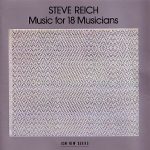
Music for 18 Musicians (1978)
If you only have one Steve Reich album, this is the one to have: a single, nearly 57-minute composition that takes you on a mesmerizing journey into fractal variations. The possibilities are endless, and it still leaves you wanting more. Composed in 1976 and released in 1978, it’s cyclical melodies, kinetic rhythm and deep ever shifting layers captured a spirt that was mesmerizingly psychedelic and cerebrally expansive. It seemed to appeal to music nerds as well as the then burgeoning meditative community.This is the holy grail for everyone from Steve Roach and Mark Isham to BT and Brian Eno.

Tehillim (1982)
Reich sets four Hebrew psalm texts in one of his most melodically arresting works, both modern and medieval. Three sopranos and an alto invoke the psalms over Reich’s colorfully interlocking cycles of percussion, winds and strings. “Tehillim” connected the dots between early music and minimalism, sacred texts and spiritual performance. The singers overlap in shifting canons, their voices riding over the steady percussion and sustained instrumental tones. These aren’t the voices you’ll hear at the gates of heaven. They’re the voices that will take you there.

Different Trains (1989)
This is a little more hardcore. The heavy-metal side of Reich peeks out in this work for the Kronos Quartet and recorded spoken voices. Its relentless drive sends you hurtling through Reich’s meditation on the Holocaust. Kronos’s insistent strings are interspersed with spoken-word segments taken from interviews with Holocaust survivors, as well as Reich’s governess and a former Pullman porter. Sounds of trains and bells also dapple the portrait Reich creates from his childhood memories. The original album also includes “Electric Counterpoint,” performed by Pat Metheny.

Drumming / Music for Mallet Instruments, Voices and Organ / Six Pianos (1974)
This originally came out as a three-LP set from Deutsche Grammophon. “Drumming” is the iconic turning point in Reich’s music, an approximately 85-minute percussive evolution in this recording that laid the groundwork for the next iteration of his music, which began with “Music for 18 Musicians.” This is an album of Zen minimalism. “Music for Mallet Instruments, Voices and Organ” adds more melodic flavor to Reich’s work and is the germinating work that led to “Music for 18 Musicians”, while “Six Pianos” develops the interlocking rhythmic patterns of his earlier compositions.

Octet / Music for a Large Ensemble (1980)
This recording comes on the heels of Music for 18 Musicians and picks up where it left off, starting at full steam instead of with a slow buildup. In “Music for a Large Ensemble,” the instrumentation is similar, with the addition of four trumpets that give the piece a bit more drama, creating Doppler-like effects across the more staccato sound of the ensemble. “Octet” is in a similar mode, with a smaller group and instruments moving in and out of prominence, sometimes adding a melodic top line played on piccolo. These are two of Reich’s most overlooked works, I think, shadowed unfairly by “Music for 18 Musicians.” “Octet” was later revised for a larger ensemble and retitled “Eight Lines.” The original ECM recording also includes “Violin Phase.”

Early Works (1987)
This is for the hardcore. Early Works features four of Reich’s seminal compositions from the 1960s and early 1970s. The two definitive tape-loop pieces, “It’s Gonna Rain” and “Come Out,” are here, as is “Piano Phase,” which brought his tape-loop phasing techniques to acoustic instruments. “Clapping Music” completes the collection. This is where it all began, and when Brian Eno talks about Reich’s influence on him, these early tape pieces are the works that sent him into his ambient directions.
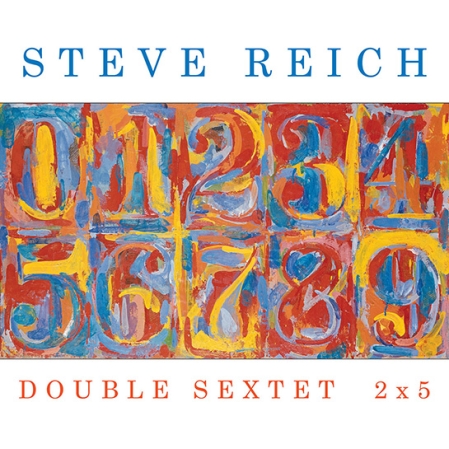
Double Sextet / 2×5 (2010)
More than three decades after Music for 18 Musicians, these works offer further variations on Reich’s repetitive, interlocking patterns. “Double Sextet” is a lusher work with strings. “2×5” is pachinko-parlor crazy, albeit with rhythm and melody, in its two “Fast” sections, and darkly portentous in the “Slow” section.
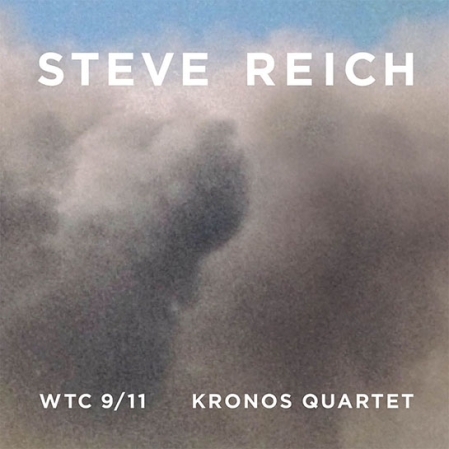
WTC 9/11 (2011)
This is one of Steve Reich’s most harrowing works, taking inspiration from the terrorist attacks on September 11, 2001. He uses techniques similar to those in “Different Trains,” incorporating voice recordings from that day from the North American Aerospace Defense Command and the New York City Fire Department, as well as excerpts from later interviews with friends and neighbors who lived in Manhattan at the time of the attacks. Their spoken words provide melodic material for the Kronos Quartet. This album sparked controversy when its proposed cover showed the North Tower in flames and the second jet airliner approaching the South Tower. The cover was changed before release. The album also includes two of Reich’s more “conventional” minimalist works, “Mallet Quartet” and “Dance Patterns.”
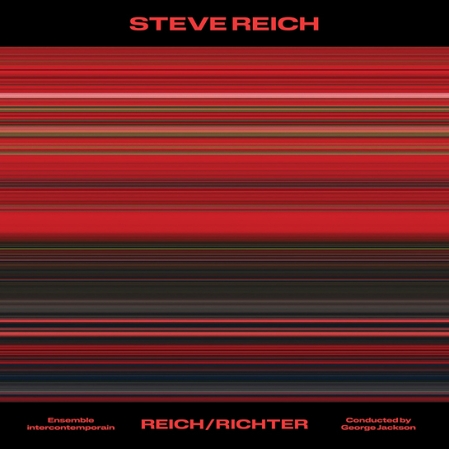
Reich/Richter (2022)
This recording features music written to accompany a film by abstract painter Gerhard Richter and filmmaker Corinna Belz. “Reich/Richter” shares a similar timbral palette with “Music for 18 Musicians,” including two vibraphones and two pianos, along with wind instruments and strings. It also shares that unfolding quality in the first two movements, which move forward in an inevitable manner. But the textures are lusher, and the long sustains provide grounding in a swirling world.

Steve Reich: Collected Works (2025)
If you want to get immersed in the Steve Reich oeuvre, Steve Reich: Collected Works is a comprehensive 27-disc box set (26 CDs and 1 DVD) released by Nonesuch Records on March 14, 2025. This massive compilation celebrates the legendary minimalist composer’s 40-year relationship with Nonesuch and spans six decades of his music, encompassing 175 tracks across roughly 23 hours of playback.this five-CD retrospective is the place to start. It covers all of his most important works, including the tape-loop piece “Come Out,” “Drumming” and “Music for 18 Musicians.” The versions of “Drumming,” “Music for 18 Musicians” and “Tehillim” are later recordings rather than the original releases discussed above. It’s the best one-stop shop for Steve Reich.