
Synthesizer Pioneer Patrick Gleeson Sounds the Final Note
by John Diliberto 7/27/2026
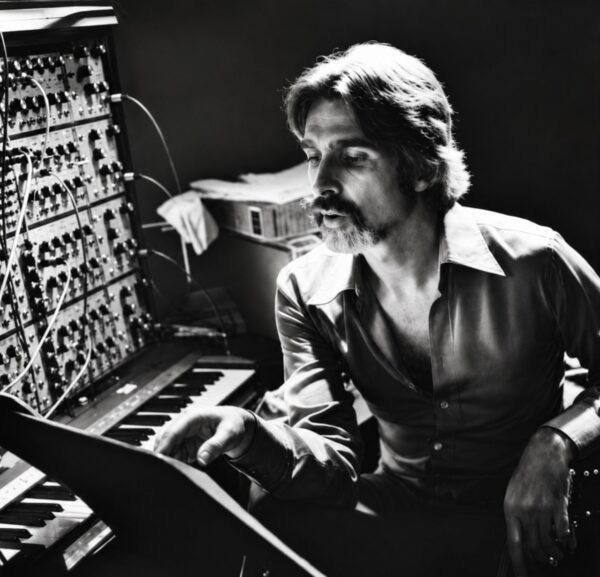 Patrick Gleeson, an early electronic pioneer, pulls his last patch cord. It is reported that he has passed at the age of 91. Born on November 9, 1934, it was just the year before last that we celebrated his 90th birthday playing music from his classic 1977 album, Rainbow Delta.
Gleeson started in electronic music in the 60s on the Buchla Box and then the ARP 2600. He was recruited to play on albums by Moby Grape, Taj Mahal, Santana and the aforementioned solo project of Jefferson Airplane members Grace Slick and Paul Kanter. His presence on their 1971 album Sunfighter, didn’t make much of an impression on me at the time, but two albums in the early 1970s by Herbie Hancock definitely did. He created an atmospheric sound around Hancock’s impressionistic free jazz on Crossings in 1972
“So we took the song “Crossings” and I asked Patrick if he could create an introduction for that song,” recalled Hancock in 2003. And he said, ‘Sure!’. Anyway, a few days go by, and when we finally get the tape back, I play the introduction, and it blew me away so much that I immediately called Patrick up and asked him to join the band — and starve like the rest of us.”
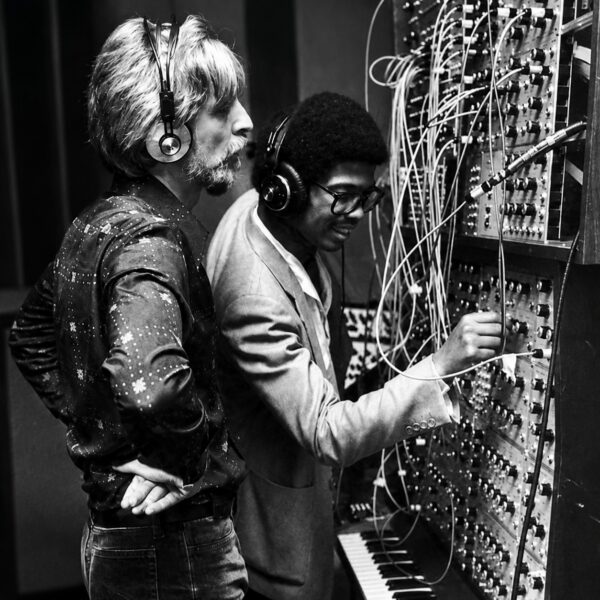 He recorded two albums with Hancock and the band known as his Mwandishi group. The most famous was the last one, Sextant, one of the truly unique albums of the first fusion era and a release that is often sampled today. In many ways it was Gleeson’s very electronic atmospheres that set Hancock’s Mwandishi group apart from his mentor in electric jazz, Miles Davis. He performed similar services for Hancock Mwandishi alumni Julien Priester and Eddie Henderson on their solo releases and in 1998, he reunited with another Mwandishi member, reed player Benie Maupin on a great revitalization of that early fusion sound, Driving While Black.
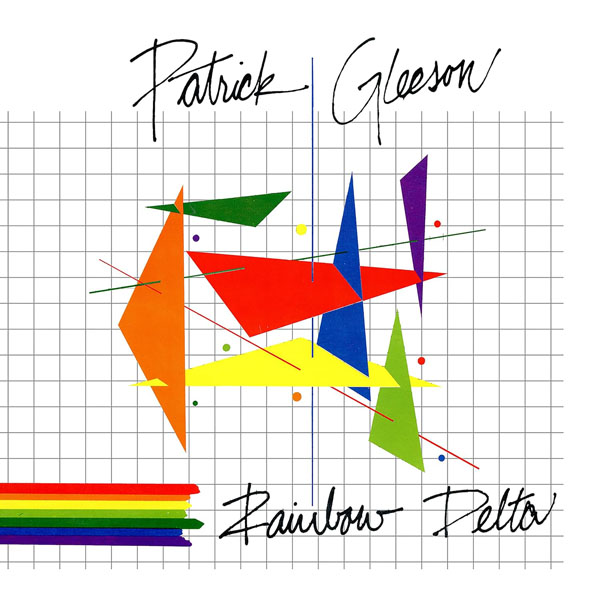
Gleeson has recorded several solo albums. Some of them were switched-on type releases playing the music of Gustav Holst – “The Planets” of course – Vivaldi’s “The Four Seasons” and John Wiliams’s Star Wars score. He’s also worked with the Kronos Quartet who performed on his score to the film The Plague Dogs. His second release came out in 1977, Rainbow Delta and it was clearly informed by the music of Tangerine Dream and Vangelis. The album features two side-long suites moving through neo-classical interludes, sequencer grooves, ambient expanses filled with electronic nature sounds, and majestic melodies.
 I interviewed Patrick in San Francisco in 1982 for the Totally Wired series. At the time his latest release was Computer Realization of Vivaldi’s The Four Seasons. I always felt his attempts at classical interpretations were a combination of money grab and technical challenge. It was Rainbow Delta, Herbie Hancock’s Mwandishi group and his later jazz incursion that seemed like his true calling.
After the Vivaldi release, Gleeson pretty much fell off my radar—and most people’s, but he was active, doing soundtracks for Apocalypse Now, Crossroads and The Bedroom Window. That last one was with ex-Santana drummer Michael Shrieve. He also scored the TV series, Knots Landing.
In 1998 he collaborated with electronic artist Meat Beat Manifesto on the album, Actual Sound + Voices. One track from it, “Prime Audio Soup,” has over 3.5 million streams due to its presence on the Music from and Inspired by The Matrix album.
He’s also created a couple of very cool electronic jazz albums: Driving While Black with Bennie Maupin and in 2007, Jazz Criminal with Jim Lang. Both of these recordings were forward-thinking releases and kind of a direction you wish Miles Davis had pursued instead of the faux-hip-hop of Doo-Bop and faux-funk of Tutu.
Patrick Gleeson was ahead of the curve. In my 1982 interview, he predicted that everyone would be making music on computers in the future. He said that makes electronic music a “folk music.” That was ver prescient. He was highly beloved by electronic musicians, but his work and profile never rose quite enough to place in the pantheon of innovators. But he leaves behind a body of important work and stamped his signature on multiple generations of musicians, even if they don’t know it.